INSIDE TIATY: QUESTIONS OVER THE SOURCES OF ILLEGAL FIREARMS AND AMMUNITION
BY HILDAH LODIE
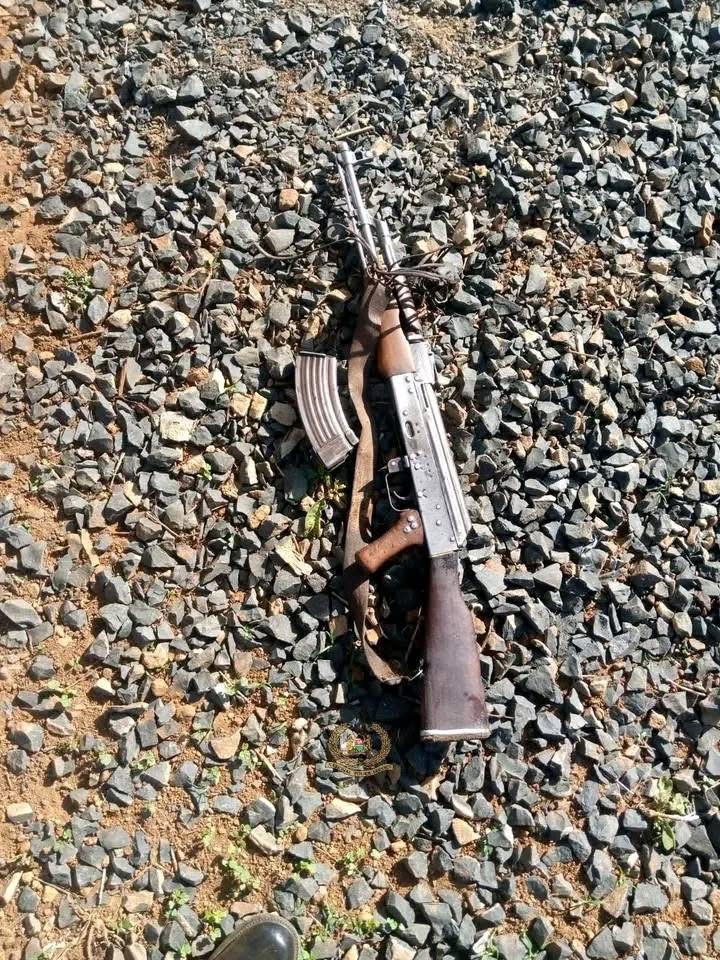
Illegal firearms and ammunition recovered during a security operation in an area affected by bandits
The circulation of illegal firearms and ammunition in Tiaty, Baringo County, has raised concerns about where the weapons come from and how they reach armed groups involved in banditry.
Interviews with local chiefs and a reformed bandit, together with an audio recording and phone transcripts obtained during the investigation, point to possible cross-border arms trafficking. However, the alleged supply routes and those responsible remain unverified.
A reformed bandit interviewed during the investigation claimed that firearms and ammunition used in Tiaty come from neighbouring countries, including Uganda.
However, the investigation has not independently established the routes used or identified the suppliers.
Local chiefs acknowledged the presence of illegal firearms but said they did not know where the ammunition originated.
Phone transcripts examined during the investigation could provide leads on suspected arms transactions. However, their authenticity and the identities of those involved require verification.
Accounts gathered during the investigation point to a security operation conducted in Tiaty in 2014 to address banditry.
According to information provided, 198 security officers were deployed, but 42 were reportedly killed during confrontations with suspected Pokot bandits. The number of bandits killed remains unknown.
The investigation also heard that some firearms were taken during the operation, while some families voluntarily surrendered their weapons.
However, official records are needed to confirm the casualty figures and establish what happened to the firearms recovered during the operation.
An audio recording reportedly circulated in July 2025 has emerged as another lead.
The recording allegedly features a man recounting how a suspected bandit bragged about killing a man from the Tugen community and members of his family over cattle.
The account raises concerns about the link between livestock theft and deadly violence in the region.
However, the identities of those involved and the circumstances of the alleged killings have not been independently verified. Police reports and witness accounts would be needed to establish the facts.
The reported deaths of 42 security officers during the 2014 operation highlight the dangers faced by security agencies in efforts to contain banditry.
The investigation raises questions about how illegal firearms enter the region, whether recovered weapons are properly accounted for, and what measures are being taken to prevent their circulation.
Police and other security agencies should explain what investigations have established about the suspected arms networks and the measures being taken to protect residents.
Several questions remain unanswered: Where do the firearms and ammunition circulating in Tiaty originate? Can claims linking the weapons to Uganda be verified? What happened to firearms recovered during the 2014 operation?
The audio recording and phone transcripts provide possible leads, but further verification is necessary before conclusions can be drawn.
The investigation highlights the difficulty of tracing illegal firearms in a region affected by banditry and cattle theft.
While accounts from a reformed bandit, local chiefs and recorded communications provide important leads, the sources of the weapons and identities of possible suppliers remain unconfirmed.
Verified records, independent investigations and corroborated witness accounts are necessary to establish the truth and hold those responsible for illegal arms trafficking and criminal attacks accountable.